VIOFO
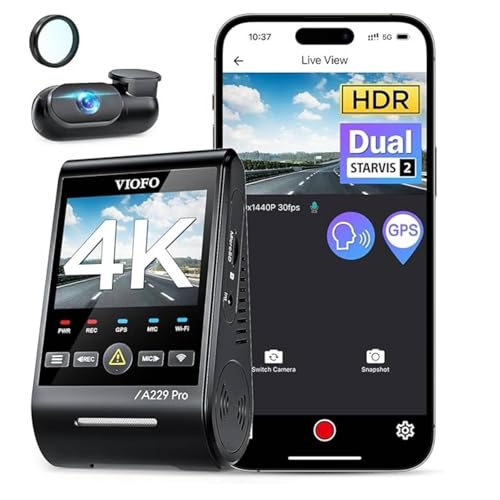
VIOFO A229 Pro 4K HDR Dash Cam Front and Rear, Dual STARVIS 2 Sensors
-22%SALE on Amazon(as of Oct 19, 2026)
- 【4K +2K Dual STARVIS 2 Sensors Dash Cam】 The pioneering A229 Pro dash cam is equipped with dual flagship STARVIS 2 image sensors - IMX678 and IMX675. Simultaneously supporting 4K 2160P resolution for the front camera and 2K 1440P for the rear camera. It delivers smooth cinematic 4K...
Analysis isn't free to run. If you buy through our links, we earn a small commission at no cost to you – it keeps the site running. Thanks!
Review
AI summary based on real user insights
The VIOFO A229 Pro has earned a strong reputation among dash cam enthusiasts for its crystal clear 4K+2K footage , with many users calling it the king of quality in its class. The dual Sony STARVIS 2 sensors — IMX678 front and IMX675 rear — draw consistent praise, with users noting a night and day difference in quality and night sensitivity compared to other cameras. Reviewers specifically call out night vision and license plate clarity as standout features, and several confirm that night clarity is genuinely solid and plates are readable in real-world conditions.
That said, not every user's experience has been flawless. A recurring frustration is the inability to record at 60fps , though one user notes you can turn off HDR to get 60fps as a workaround. Heat management is a notable concern, with multiple users reporting that the Pro is prone to thermal shutdown and heat issues in summer conditions, though others counter that it worked well in Texas and Vegas summers . Additional complaints include a pain to connect via WiFi since recording must be stopped to enable it, a weak companion app , and isolated reports of license plates appearing unreadable and footage seeming unsharp .
The A229 Pro suits drivers who prioritize image fidelity above all else — as one commenter puts it, if you need 4K, get the Pro . It also appeals to those who want a largely hands-off experience, with users describing it as basically set and forget once installed. The fairly easy installation and the fact that it sits hidden completely from view behind the rear view mirror make it a practical daily driver, while serious video creators are also noted as a core audience.
On value, the consensus is strongly positive — users repeatedly describe it as bang for buck hard to beat and the best balance for the money , with several saying they will buy them again 100% . It has been recognized as a Wirecutter choice and users note that the Pro by far outsells the plus models , reflecting genuine market confidence. A few caveats around value include zero onboard memory or battery , meaning extra purchases are required, and parking mode options described as mediocre with higher current draw than the competition .
One theme users return to consistently is long-term reliability satisfaction — commenters report no issues at all after weeks of use, and one owner mentions running three of the Pros and loving them . On the flip side, at least one user reported the dash cam gave out in 6 months , and customer support from VIOFO has drawn criticism , though a separate commenter says support will send a replacement right away . Overall, the A229 Pro stands as a well-rounded camera that earns the description definitely the best you can get and hard to beat for its price tier.
Related Products
More VIOFO products
Reddit Discussions
Reddit Discussions20 of 243