May 18, 2026394Best PicksWater Filter Pitcher
Best Water Filter 2026 — One Pick in Every Category
This guide presents one trusted pick in each major water filtration format – pitcher, countertop, under-sink, and reverse osmosis. We've selected the Waterdrop 10-Cup pitcher, WD-A1 countertop RO system, TSU UF under-sink filter, and G5P700A reverse osmosis system based on performance, reliability, and value. Each recommendation represents the standout option in its category for different installation needs and budgets.
As an Amazon Associate I earn from qualifying purchases at no cost to you – it keeps the site running.
Related guides
Waterdrop 10-Cup – Best Pitcher

Overview: The Waterdrop 10-Cup is an NSF-certified pitcher filter with a distinctive wooden handle and hands-free spout design. Its 200-gallon filter capacity lasts 5x longer than typical pitcher filters, reducing chlorine by up to 97.4% and targeting PFOA/PFOS contaminants. This pitcher suits households wanting reliable filtration without frequent filter changes.
What sets the Waterdrop 10-Cup apart from standard pitcher filters is its extended filter life and thoughtful design details. The hands-free spout eliminates the need to remove the lid for refilling, while the ergonomic wooden handle provides a secure grip and aesthetic appeal. The 10.4" x 5" x 10.1" dimensions fit most refrigerator doors, though measuring your specific fridge space is recommended.
The NSF 42 and 372 certifications provide third-party verification of its contaminant reduction claims, particularly for chlorine and lead-free materials. However, like all pitcher filters, it won't match the comprehensive filtration of the under-sink or RO systems in this roundup, making it primarily suitable for improving taste and odor rather than addressing serious water quality concerns.
Pros
200-gallon filter life is 5x longer than typical pitchers
Hands-free spout design prevents lid removal during refills
NSF certified for chlorine and PFOA/PFOS reduction
Natural wooden handle adds durability and style
Fits in most refrigerator doors
Cons
Limited contaminant removal compared to multi-stage systems
Requires regular filter replacement despite extended life
May not fit all refrigerator configurations
Best for Households seeking a low-maintenance pitcher filter with extended filter life and reliable chlorine removal.
DREO Reverse Osmosis Countertop – Best No-Install RO Filter
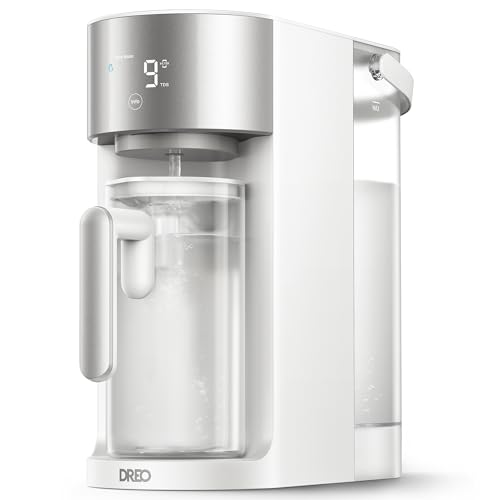
Overview The DREO countertop reverse osmosis filter delivers RO-grade purification with no plumbing work — set it on the counter, fill the tank and pour. The best pick for renters and anyone who wants RO water without touching the sink.
Reverse osmosis is the most thorough home filtration there is, stripping dissolved solids, heavy metals and contaminants that carbon filters pass through — but it normally means an under-sink install with a drilled faucet and a drain line. The DREO countertop unit skips all of that: no plumbing, no drilling, no landlord permission needed.
Multi-stage filtration handles sediment and chlorine before the RO membrane does the heavy lifting, and the unit shows filter life so you replace on schedule rather than guessing. Because it is self-contained, it moves with you — useful for renters who would otherwise leave an under-sink system behind.
Countertop RO has a smaller capacity than a plumbed system and takes up counter space, and RO does produce some waste water. But for genuine RO purity with zero installation, it is the standout.
Pros
Full RO purification with zero plumbing or drilling
Multi-stage filtration before the RO membrane
Filter-life indicator so replacement is not guesswork
Portable — moves with renters between homes
Cons
Smaller capacity than a plumbed under-sink system
Takes counter space and produces some waste water
Best for Renters and anyone wanting RO-grade water without modifying the plumbing.
Waterdrop TSU UF Smart Panel – Best Under-Sink

Overview: The Waterdrop TSU uses 0.01-micron ultrafiltration technology in a 3-stage tankless system that installs under the sink with a dedicated faucet. Unlike RO systems, it retains beneficial minerals while removing 30+ contaminants without producing wastewater or requiring electricity. This system targets households wanting comprehensive filtration while preserving water's natural mineral content.
The TSU's ultrafiltration approach differs significantly from the G5P700A reverse osmosis system by maintaining essential minerals and TDS levels while still achieving effective contaminant removal. Its 0.01-micron membrane blocks bacteria, cysts, and larger contaminants without the water waste associated with RO systems. The smart panel provides filter life monitoring and system status updates.
Installation requires drilling a hole in your countertop for the dedicated faucet, which may deter some users. The system works only with municipal tap water and cold water sources, making it unsuitable for well water applications where the G5P700A's more aggressive filtration might be necessary.
Pros
0.01-micron ultrafiltration removes 30+ contaminants
Retains beneficial minerals unlike RO systems
No wastewater production or electricity required
Tankless design saves under-sink space
Smart panel monitors filter life and system status
Cons
Does not reduce TDS levels
Requires countertop drilling for dedicated faucet
Not suitable for well water or hot water sources
Best for Homeowners with municipal water who want comprehensive filtration while retaining natural minerals and avoiding water waste.
Waterdrop G5P700A – Best Reverse Osmosis

Overview: The Waterdrop G5P700A is an 8-stage reverse osmosis system with alkaline mineralization, producing 700 gallons per day through a 0.0001-micron membrane. NSF/ANSI 58 & 372 certified, it removes PFOA/PFOS, heavy metals, and fluoride while adding back essential minerals like calcium and magnesium. This tankless system suits households needing the most comprehensive water treatment available.
The G5P700A represents the most thorough filtration approach in this roundup, using RO membrane technology that removes virtually all contaminants down to 0.0001 microns. Unlike the TSU UF system, it reduces TDS to near-zero levels before remineralizing the water with beneficial minerals. The 700-gallon daily capacity and 2:1 pure-to-drain ratio make it more efficient than older RO systems.
The tankless design saves 70% of under-sink space compared to traditional RO systems, while the smart LED faucet provides real-time system monitoring. However, the complexity of 8-stage filtration means higher maintenance costs and more frequent filter changes than simpler systems, and the initial installation may require professional help for optimal performance.
Pros
8-stage filtration removes widest range of contaminants
0.0001-micron RO membrane with mineral re-addition
700 GPD capacity with efficient 2:1 waste ratio
Tankless design saves significant under-sink space
Smart LED faucet with system monitoring
Cons
Highest maintenance complexity and cost
May require professional installation
More expensive than other filtration methods
Best for Households requiring the most comprehensive water treatment with mineral enhancement and high daily capacity.
Loading comments...