February 23, 20265,787Best PicksSmart Scale
Best Smart Scale Recommendation 2026 — Three Picks for Every Tracker
A smart scale is only worth having if the numbers mean something — which comes down to electrode count, app quality and whether it recognises everyone in the house. This Best Of names one winner per need: an 8-electrode flagship for segmental accuracy, the best app experience, a balanced mid-range pick and an affordable entry point.
As an Amazon Associate I earn from qualifying purchases at no cost to you – it keeps the site running.
Related guides
RENPHO 8-Electrode Smart Scale – Best Overall

Overview The RENPHO 8-electrode smart scale is the best overall pick — RENPHO is the dominant brand in this niche, and the 8-electrode design measures each limb separately for genuinely accurate body-composition readings rather than a whole-body estimate.
Electrode count is the spec that decides whether body-fat numbers mean anything. A basic 4-electrode scale sends current up one leg and down the other, then estimates your whole body from that path — it never actually measures your arms or torso. The 8-electrode design here adds handles, so current passes through all four limbs and the trunk, giving segmental readings per arm and per leg instead of one guess.
That matters if you are tracking training progress: you can see muscle developing in the arms specifically, or catch asymmetry between left and right. The app stores long-term trends, supports multiple household members with automatic recognition, and syncs to Apple Health, Google Fit and Fitbit so the data joins the rest of your fitness picture.
It is the priciest scale here, and 8-electrode measurement requires holding the handles rather than just stepping on. But for body-composition data you can actually trust from the category-leading brand, it is the overall pick.
Pros
8 electrodes — segmental readings per limb, not a whole-body estimate
Category-leading RENPHO brand and app
Multi-user auto recognition with long-term trends
Syncs to Apple Health, Google Fit and Fitbit
Cons
Priciest pick here
Requires holding the handles for full measurement
Best for Anyone training seriously who needs body-composition data they can trust.
Wyze Scale Ultra BodyScan – Best Smart / App Experience
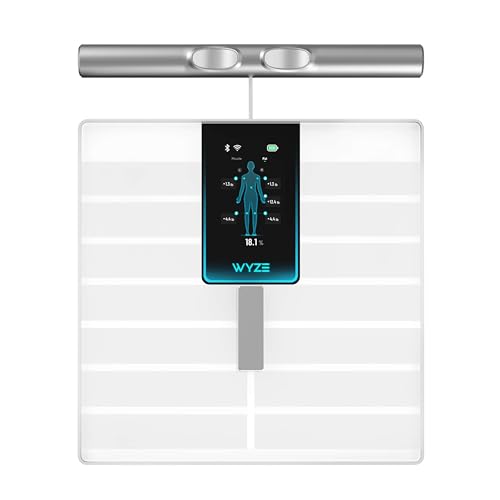
Overview The Wyze Scale Ultra is the best smart pick — BodyScan measurement with retractable handles, heart-rate reading and Wyze's polished app ecosystem, at roughly half the price of the flagship.
Wyze built its reputation on undercutting premium smart-home brands without feeling cheap, and the Scale Ultra follows that pattern: handles for full-body scanning, heart-rate measurement on top of weight and composition, and an app that is genuinely pleasant to use rather than an afterthought bolted onto hardware.
The app is the real differentiator here. Trend charts are readable, multi-user handling is automatic, and if you already run Wyze cameras or plugs everything lives in one place instead of another single-purpose app on your phone. Data exports to the major health platforms as well.
Wyze is a value brand rather than a medical-grade instrument maker, so absolute accuracy trails the RENPHO flagship slightly. But it carries by far the longest offer here — running to the end of March 2027 — and for app experience per dollar nothing else comes close.
Pros
BodyScan with retractable handles plus heart rate
Best app experience of any pick here
Integrates with existing Wyze smart-home setup
Longest offer by far — through 2027-03-31
Cons
Accuracy slightly behind the RENPHO flagship
Value brand, not a medical-grade instrument
Best for Smart-home users who want the best app experience and long-term value.
Etekcity Smart Scale – Best Mid-Range

Overview The Etekcity smart scale is the mid-range pick — reliable body-weight and body-fat tracking with a well-supported app at around $71. The sensible middle ground between budget and flagship.
Most people do not need segmental per-limb readings — they need a scale that records weight and body-fat consistently, remembers who stepped on it, and shows whether the trend is going the right way. Etekcity covers exactly that, and does it with the app maturity of a brand that has been in this category for years.
It handles multiple household members, keeps history so you can see monthly rather than daily noise, and syncs to the main health platforms. The build is solid tempered glass with a clear display, and setup takes a couple of minutes with no account gymnastics.
It uses 4-electrode measurement, so body-composition figures are estimates rather than segmental readings, and there is no heart rate. But for reliable everyday tracking at a mid-range price, with an offer running to the end of the year, it is the balanced choice.
Pros
Reliable weight and body-fat tracking
Mature app with multi-user support and history
Syncs to the major health platforms
Offer through 2026-12-31
Cons
4-electrode — composition figures are estimates
No heart-rate measurement
Best for Everyday tracking without paying for segmental measurement you will not use.
GE Body Composition Scale – Best Budget

Overview The GE Body Composition scale is the budget pick — full body-composition tracking from a household-name brand at around $43, with the longest offer of any scale here.
Under $45 usually means an unbranded scale with an app that quietly stops working. The GE name changes that: a recognised brand with genuine support, so the app keeps receiving updates and the hardware is predictable rather than a gamble against the no-name competition at this price.
It tracks the full composition spread — weight, body fat, muscle mass, water and BMI — with per-user history so you read monthly trends instead of daily noise, and syncing to the main health platforms. Setup takes minutes and multiple household members are handled automatically.
It uses 4-electrode measurement, so figures are estimates rather than segmental readings, and there is no heart rate or handle. But for full composition tracking on a budget from a brand that will still be supporting it in two years, it is the pick — with an offer running well into 2027.
Pros
Household-name brand at around $43
Full composition spread: fat, muscle, water, BMI
Per-user history with health-platform syncing
Longest offer of any scale here — into 2027
Cons
4-electrode — figures are estimates, not segmental
No heart rate or handle electrodes
Best for Budget buyers who want full composition tracking from a supported brand.
Loading comments...