March 24, 2026344Best PicksRobot Vacuum
Best Robot Vacuum — Best Of Across Every Use Case
This is the curated 'Best Of' — one top pick from each major robot vacuum category we deep-dived this year. Four winners across three brands — DREAME, ECOVACS and uninell — covering the premium mop flagship, the AI-obstacle-avoidance flagship, the OMNI mop combo and the budget LiDAR pick. If you're shopping for a number one robot vacuum and don't want to read every comparison post, these are the highest rated robot vacuum picks of the year by use case.
As an Amazon Associate I earn from qualifying purchases at no cost to you – it keeps the site running.
Related guides
DREAME L40s Ultra CE Robot Vacuum and Mop

Overview The DREAME L40s Ultra CE is a self-emptying vacuum-and-mop combo built around an all-in-one base that handles dust collection, hot-water mop wash and hot-air dry without user intervention. It pairs strong suction with an extending mop pad and anti-tangle roller brush for edges and pet hair. App control adds zoned cleaning, no-go zones and scheduling on top of the auto-dock cycle.
Self-emptying is the headline reason to pick this one over plain robovacs – the base swallows debris for weeks at a time and washes the mop pad with hot water, so the only routine chore is refilling clean water and emptying dirty. That hands-free loop is what beat cheaper self-emptying competitors in our combos roundup: many rivals empty dust but skip mop washing, leaving you scrubbing pads by hand.
The extending mop arm reaches baseboards and toilet bases better than fixed twin-pad designs, and the anti-tangle brush handles long hair without weekly cutting. Trade-offs: the dock is bulky and needs a permanent floor footprint, and detergent/scent dosing is brand-locked. Carpet boost is good but not flagship-tier – heavy plush rugs still favor the X60 Max Ultra below.
Pros
Full self-emptying base with hot water mop wash and hot air dry – truly hands-free for weeks
Extending mop pad reaches baseboards and toilet bases that twin-pad rivals miss
Anti-tangle roller brush handles long and pet hair without weekly maintenance
AI obstacle avoidance and LiDAR mapping with no-go zones via app
Strong everyday suction for mixed hard floor and low-pile carpet
Cons
Dock has a large permanent floor footprint
Consumables and scent dosing are brand-locked to DREAME
Best for Best for buyers who want a fully hands-free self-emptying combo dock at a mid-flagship price without stepping up to the X60 Max Ultra.
DREAME X60 Max Ultra Robot Vacuum and Mop
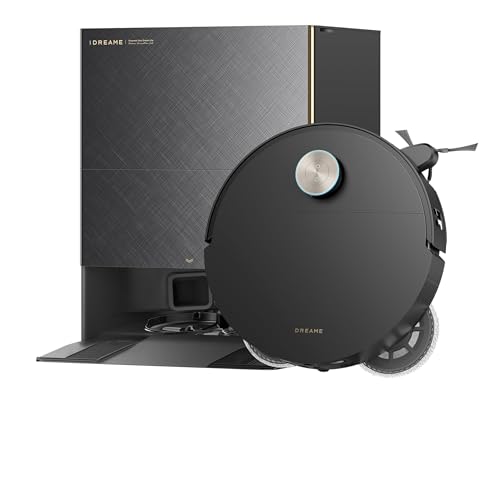
Overview The DREAME X60 Max Ultra is the brand's current mop-combo flagship, upgraded from the X50 Ultra with 25,000Pa suction, RoboSwing pad articulation and a RoboArm that physically extends to clean edges and corners. The dock handles hot water mop wash, hot air dry and self-emptying in one cycle. AI obstacle avoidance and LiDAR mapping round out a top-of-stack feature set.
This is the pick when budget isn't the constraint and you want the most complete mop combo on sale. RoboArm beat every static mop pad in our combo comparison – it physically reaches under cabinet kicks and around toilet bases instead of just dragging a pad past them. Combined with RoboSwing, edge mopping actually rivals manual work, which no twin-pad design at half the price has matched.
Suction at 25,000Pa is well above mainstream flagships, and the hot water wash plus hot air dry kills the musty-pad smell that haunts cheaper combos. Real trade-offs are price and dock size – this is a $1,700 appliance with a large station footprint, and the RoboArm mechanism adds long-term service complexity. If you don't need extending arms, the L40s Ultra CE delivers most of the value for far less.
Pros
RoboArm physically extends to clean edges, corners and under kicks – beats static pads
25,000Pa suction handles deep carpet and crevice debris like a flagship should
Hot water mop wash and hot air dry eliminate musty pad smell between runs
RoboSwing pad articulation for true edge mopping
Full self-emptying base – weeks of hands-free operation
Cons
Premium flagship pricing at $1,699.99
Bulky dock and added mechanical complexity from RoboArm
Best for Best for buyers who want the most fully featured mop-combo flagship of 2026 and refuse to compromise on edge-cleaning or hands-free operation.
uninell UR3 Robot Vacuum and Mop Combo
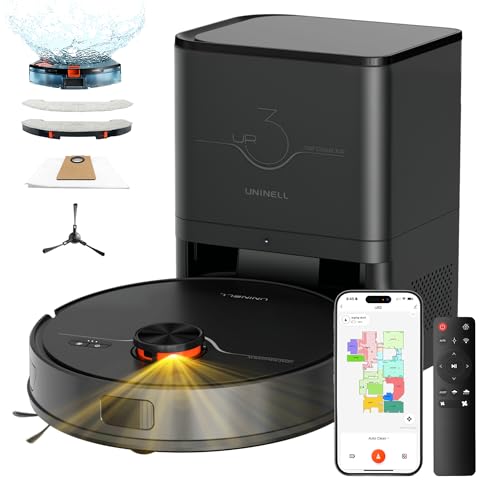
Overview The uninell UR3 is a budget LiDAR-navigated vacuum-and-mop combo with a self-emptying dock – an unusually complete feature set for under $200. It targets pet-hair pickup on hard floor and low-pile carpet, with smart mapping and app scheduling. The package undercuts every brand-name self-emptying combo in our budget roundup while keeping the core hands-free workflow.
What earned this the budget crown was the rare combo of LiDAR navigation plus self-emptying at sub-$200 – competitors at this price either skip LiDAR (random bouncing) or skip the dock (manual emptying every run). The UR3 keeps both, so you get accurate room maps, no-go zones and weeks between bin empties without the flagship spend.
Compromises are honest: 5,000Pa-class suction is fine for hard floor and low-pile carpet but won't dig out deep plush rugs, the mop pad is a simple drag (no hot wash, no extending arm), and brand support and app polish lag DREAME or ECOVACS. For a small apartment or a secondary floor, those trade-offs are exactly the right ones at this price.
Pros
LiDAR navigation with smart mapping at a sub-$200 price – rare combo
Self-emptying dock included instead of pay-up upgrade
App control with no-go zones and zoned cleaning
Tuned for pet hair on hard floor and low-pile carpet
Massive value vs flagship combo pricing
Cons
Mop pad is a basic drag – no hot water wash or extending arm
Suction class won't handle deep plush carpet
Brand support and app polish lag the big names
Best for Best for budget-first buyers who still want LiDAR mapping plus a self-emptying dock in a small apartment or secondary floor.
ECOVACS DEEBOT T90 PRO OMNI Robot Vacuum and Mop
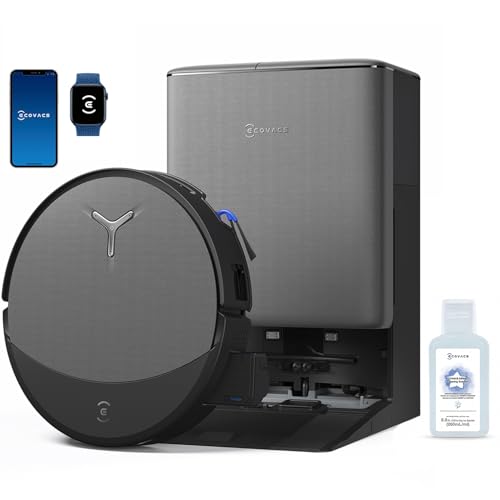
Overview The ECOVACS DEEBOT T90 PRO OMNI pairs 30,000Pa suction with AIVI 3D 3.0 obstacle avoidance – the brand's latest stereo-vision AI – and an industry-first lifting and spinning mop system with hot water wash and hot air dry. The OMNI station handles self-emptying, mop washing and drying in one dock. It's positioned as the AI-obstacle category winner at a sub-$700 price.
AIVI 3D 3.0 is what earned this the AI obstacle crown over LiDAR-only rivals – stereo-vision plus AI classification means it identifies the object class (cable, sock, pet, charger) instead of just routing around a blob. In our AI obstacle roundup that translated to dramatically fewer cable-eating incidents and tangled runs in cluttered rooms.
The lifting-and-spinning mop pads rise over carpet automatically – avoiding the soaked-rug problem cheaper combos still suffer – and hot water wash plus hot air dry keep them sanitary. Trade-offs: ECOVACS app and ecosystem are heavier than DREAME's, and 30,000Pa peak suction comes with louder max-power runs. For obstacle-rich homes with kids, pets and cables, that's a fair tax.
Pros
AIVI 3D 3.0 stereo-vision AI classifies objects, not just shapes – fewer cable incidents
30,000Pa suction matches flagship-tier rivals
Industry-first lifting and spinning mops – pads rise over carpet automatically
Hot water wash and hot air dry in the OMNI station
Full self-emptying plus mop care in one dock
Cons
App and ecosystem are heavier than DREAME's
Max-power suction runs are noticeably loud
Best for Best for cluttered, cable-heavy homes that need true AI object recognition instead of LiDAR-only avoidance.
Dreame D30 Ultra CE (25,000Pa) – Best Suction Value

Overview The Dreame D30 Ultra CE brings 25,000Pa suction — flagship-tier power — at a mid-range price. The best suction-per-dollar pick from a top-3 robot vacuum brand.
25,000Pa is genuine flagship suction, and it is the spec that decides whether a robot lifts embedded grit out of carpet pile or just tidies the surface. Getting it at this price is unusual — most robots at the D30 CE tier sit closer to 8,000–13,000Pa, which is fine for hard floors but noticeably weaker on rugs.
It pairs that power with a self-maintaining station and the Dreame app platform, so mapping, no-go zones and scheduling all work the way they do on the flagships. For a mixed-floor home with real carpet, the extra suction is the upgrade that actually shows in results.
The CE variant is worth checking for regional WiFi band compatibility before buying, and the station is less elaborate than top-end OMNI docks. But for flagship suction without flagship pricing, the D30 Ultra CE is the value standout.
Pros
25,000Pa — flagship suction at a mid price
Lifts embedded grit from carpet, not just surface dust
Self-maintaining station with mature Dreame app
Best suction-per-dollar here
Cons
CE variant — verify regional WiFi compatibility
Station less elaborate than top-end OMNI docks
Best for Mixed-floor homes with carpet that need flagship suction without flagship cost.
Loading comments...