December 19, 2025253ComparisonCamera Drone
Best 4K Camera Drone 2026 — Picks Worth Recommending
The best camera drones deliver aerial footage that's actually worth watching — sharp resolution, stable video, and enough smart features to get the shot without a professional pilot's skill level. We compare top camera drone picks on image quality, flight stability, obstacle handling, and value.
As an Amazon Associate I earn from qualifying purchases at no cost to you – it keeps the site running.
As an Amazon Associate I earn from qualifying purchases at no cost to you – it keeps the site running.
Related guides
DJI Mini 4K — Best Entry-Level 4K Drone
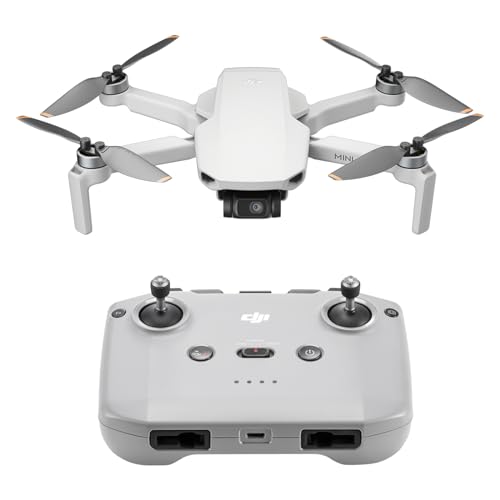
Overview The DJI Mini 4K is the cheapest way into the DJI ecosystem. Under 249g (no FAA registration in most jurisdictions), 4K UHD camera, 3-axis mechanical gimbal, 10km video transmission, GPS return-to-home, 31-minute flight time per battery.
This is the answer to "what's the cheapest drone I should actually buy" — sub-249g means no FAA registration in the US, the 3-axis mechanical gimbal delivers genuinely smooth 4K (not the digitally-stabilized fake-4K from no-name brands), and you're flying on DJI's mature firmware with reliable GPS hold and return-to-home.
Trade-offs versus pricier DJI models — no obstacle avoidance, single-battery package (the Combo adds spares), and the camera is fixed 4K/30 with no HDR. But for the price point, no competitor matches DJI's flight reliability and footage quality.
Pros
Sub-249g — no FAA registration in most jurisdictions
3-axis mechanical gimbal for genuinely smooth 4K
DJI flight firmware — reliable GPS hold and RTH
31-minute flights, 10km transmission
Cons
No obstacle avoidance
Single battery — Combo adds spares
Best for First serious camera drone — buyers who want DJI quality at the lowest entry price.
Potensic ATOM 2 — Best DJI Alternative

Overview The Potensic ATOM 2 is the strongest non-DJI flagship in the sub-249g class. 4K video, 8K stills, 3-axis mechanical gimbal, GPS, dual-band transmission, 32-minute flight time and ActiveTrack-style subject tracking.
Potensic is the brand to look at if you want flagship features without the DJI badge tax. The ATOM 2 hits the same sub-249g class as DJI's Mini line, with a comparable 3-axis mechanical gimbal and a feature list that actually exceeds the base Mini 4K — 8K still photo mode, subject tracking and a brighter sensor for low-light shots.
Where DJI still wins is firmware maturity and the OcuSync transmission system. Potensic's dual-band link is solid but doesn't match DJI's 10km range in real-world conditions. For most weekend flyers that gap won't matter — and the feature-per-dollar ratio is the best in the segment.
Pros
Sub-249g class with flagship feature set
3-axis mechanical gimbal, 8K stills, 4K video
Subject tracking and intelligent flight modes
Better feature-per-dollar than equivalent DJI
Cons
Transmission range falls short of DJI in long-distance flights
App ecosystem younger than DJI Fly
Best for Buyers who want the most flagship features in the sub-249g class without paying the DJI premium.
Veeniix V11PRO RC2 — Best 4K Drone with Active Offer

Overview The Veeniix V11PRO RC2 is a long-range adult drone with 8K stills, 4K video, a 3-axis mechanical gimbal and a dedicated screen-equipped RC2 controller (no phone required). Multiple batteries and a carrying case ship in the kit.
Veeniix is one of the few mid-tier brands that ships a real built-in-screen controller in the box — meaning you don't mount your phone in the heat, glare or rain, and the controller stays usable when your phone needs charging. Combined with a 3-axis mechanical gimbal and 4K/30 video, the V11PRO RC2 is a complete kit for the price.
It's not in the DJI/Potensic class for flight firmware refinement, but it currently ships with an active manufacturer offer which makes the price-to-spec ratio genuinely strong. Real 3-axis gimbal here, not the digitally-stabilized "3-axis" that lower-end brands market.
Pros
Built-in screen RC2 controller — no phone needed
Real 3-axis mechanical gimbal, 4K/30 video, 8K stills
Multi-battery kit with carrying case
Active manufacturer offer at time of writing
Cons
Flight firmware less refined than DJI/Potensic
Heavier than sub-249g class
Best for Buyers who want a built-in-screen RC and a real gimbal at a discounted price point.
Ruko F11PRO 2 Plus — Best Long-Range 4K Drone

Overview The Ruko F11PRO 2 Plus is a long-range GPS drone with 8K still photography, 4K/30 video, a 3-axis gimbal stabilizer, 48MP sensor and roughly 70 minutes of total flight time across the included batteries.
The pitch here is range and runtime — Ruko ships multiple batteries in the box (most competitors charge extra) and the F11PRO 2 Plus is one of the longer-range non-DJI quadcopters in this comparison. The 48MP sensor delivers usable 8K stills and the 3-axis stabilization holds 4K footage clean enough for client work.
It's heavier than the sub-249g class so registration applies, and the controller relies on phone mounting rather than a built-in screen. But for buyers who fly long sessions and don't want to babysit a single battery, Ruko's multi-pack value is hard to beat.
Pros
~70 minutes total flight time across included batteries
3-axis gimbal with 48MP sensor and 4K/30 video
Long control range for the price tier
Established brand with available spare parts
Cons
Over 249g — registration required
No built-in screen on controller
Best for Long-session flyers who want maximum airtime in the box without buying spare batteries.
Loading comments...